

Bliss Towers, Then
Memory, housing, and the promise of getting this right

This piece is the first in a two-part series on Bliss Towers — its history, its meaning to those who grew up there, and the questions facing the city now as redevelopment plans move forward.
When I started poking around about Bliss Towers, a few people pointed me to the same person: Tyrone Hedgepeth. Tyrone is the kind of person that everyone seems to know and love, including my daughter. He is the longest-running employee at the Youth Department, and part of the constellation of grown-ups who make our children’s after-school hours and summers at Oakdale camp feel safe and expansive.
I kept hearing the same story about him: he was the first person to stay overnight in Bliss Towers when it opened. And after speaking with Tyrone on a picnic table on a chilly afternoon outside the Youth Department, I heard that story firsthand.
He was nine years old.
Before Bliss, he and his mother had been staying with his grandmother on Columbia Street, sharing space while the high-rise went up. He remembers adults talking about houses being torn down, about people moving, about something called “urban renewal.” He didn’t understand the politics. What he understood was this: when the building was ready, that’s where they were going.
The night they moved in, cousins helped carry things upstairs. But when the door finally closed and it was just him and his mother inside their new apartment, it felt different. The smell of fresh paint still hung in the air. The hallway lights were bright and steady. The elevator ran smoothly, no groaning cables, no hesitation between floors. After sharing rooms for so long, he suddenly had his own bedroom.
“It was comfort,” he told me. “Just me and my mom.”
He remembers a quiet that felt anticipatory. Rooms without furniture. Hallways without scuff marks. Windows looking out over a Hudson that was changing quickly then too. They were the only ones sleeping there that night. The next day, more families from the neighborhood would begin moving in. People he already knew. A whole community moving vertically together.
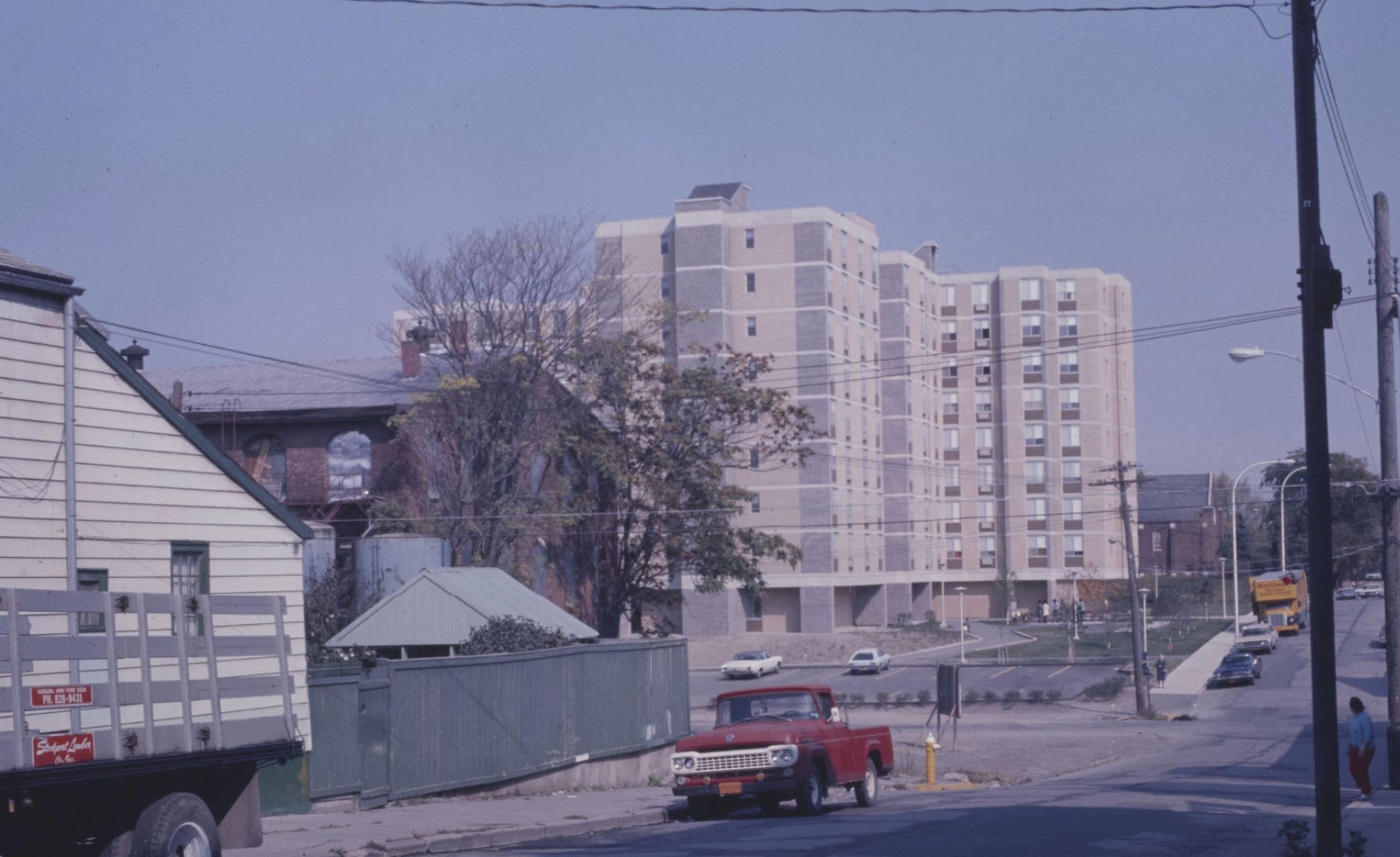
By the time the building filled up, it felt alive.
If you weren’t able to have fun back then, Tyrone said, “something was wrong.” Bliss had a playground behind it, but he laughed when I asked about it. “Bliss itself was the playground.”
In the winter, when it was too cold to be outside, the second floor — where he lived — became the hangout spot. Kids dragged little boom boxes into the hallway and held dance contests. They played tag and hide-and-seek up and down the stairwells, rubber soles slapping concrete, laughter ricocheting off the walls. Doors stayed cracked open. Parents didn’t mind them playing in the halls because they were safe and inside. There was one rule: don’t leave your floor without asking.
As they got older, the building became a fitness training ground. Tyrone would run the stairs for strength and conditioning — all the way down to the ground floor, up to the ninth, out the back doors, and back again. He would try to do it ten times without stopping. The building shaped his legs, his lungs, his sense of himself.
He lived there through elementary school at John L. Edwards, through high school, through college. His mother still lives there today. She has had opportunities to move, he told me, but she never wanted to. She didn’t have to worry about maintenance or garbage or getting things fixed. She was content.
Now, more than fifty years later, the building has aged. The paint has dulled. The floors have worn. But when Tyrone talks about that first night, it still feels close.
Before we get to where we are today — Bliss in disrepair, a community again grappling with a housing crisis and what to do about it — it feels important to begin here. A child and his mother, alone in a new building. A key turning in a fresh lock.
Bliss Towers was built in 1973, at the tail end of a national experiment in public housing shaped by mid-century ideas about density, efficiency, and the role of the state in addressing housing shortages. It was constructed to house seniors, people with disabilities, and low-income families, at a moment when Hudson — like many small industrial cities — was already deep into economic and demographic change.
A few years prior, in 1966, state assessments had identified that Hudson had some of the poorest housing stock in New York – a designation tied to widespread structural deterioration, unsafe living conditions, and aging buildings that failed to meet basic health and safety standards. This underscored the genuine need while also setting in motion the clearance-driven strategies that defined urban renewal in the years that followed.
By the time Bliss opened, Hudson had already been profoundly reshaped by urban renewal. In the years leading up to its construction, the city cleared large swaths of a dense, working-class neighborhood, stretching north from Front Street toward the waterfront, including blocks along Columbia Street and parts of First, Second, Third, and Fourth Streets. According to city records, 286 buildings were demolished, clearing roughly 50 acres of urban housing. More than 200 families — nearly 850 people, close to one in ten Hudson residents at the time — were displaced.
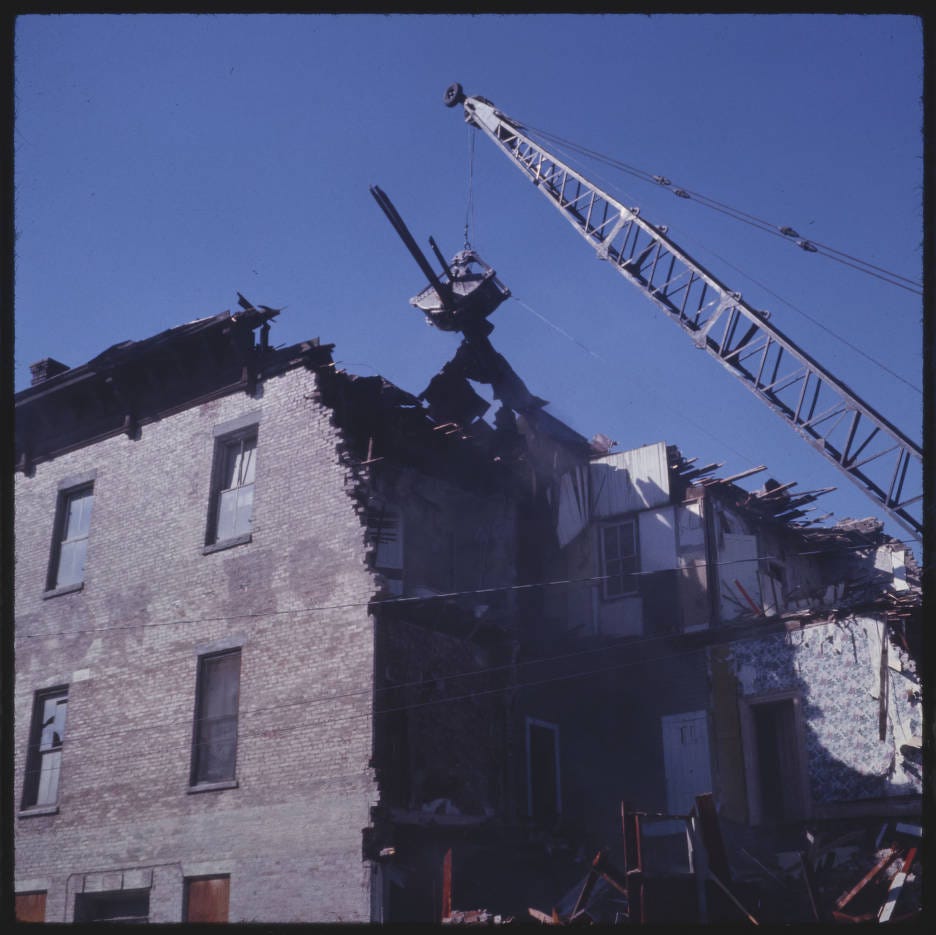
Although the buildings were dilapidated, the neighborhoods were alive: dense, lived-in, and socially connected. But they were also disproportionately working-class, and ultimately those neighborhoods were not prioritized for preservation. Urban renewal in Hudson, as elsewhere, prioritized preservation and investment in the central business district along Warren Street while clearing residential areas considered “blighted.”
My own family lost a house to urban renewal. They owned 2 Warren Street, a home that had been in my family since the late 1800s. By the time it was taken down, my great-grandparents and grandparents had already moved out, but my great-aunt Liz Miroddi was still living there. She, too, ended up in public housing. I remember visiting her at the Terrace in the ‘90s: the playground, the kids everywhere, how fun and connected it all felt.
My family’s loss mattered, but it did not sever our roots in Hudson. My grandparents had already moved to Greenport, and my mom later settled in the Fifth Ward, where I grew up and live today. Our family remained housed and rooted.
That path was not as accessible to others in Hudson at the time. While many Black families displaced by urban renewal were rehoused — often in public housing — they were far less likely to move on to homeownership or to benefit from the asset-building that followed for others. Urban renewal in Hudson did not simply change where people lived. It reorganized who was offered permanence, mobility, and long-term stability. And who was not.
And yet — alongside that history — there is lived memory.
Linda McGriff Andrews, who grew up in Hudson’s public housing in the 1990s (and who I graduated with), remembers it as a tight-knit community. Her mother first lived in Bliss before moving to the Low Rise to accommodate their large family, an adjustment within the same ecosystem of neighbors and cousins.
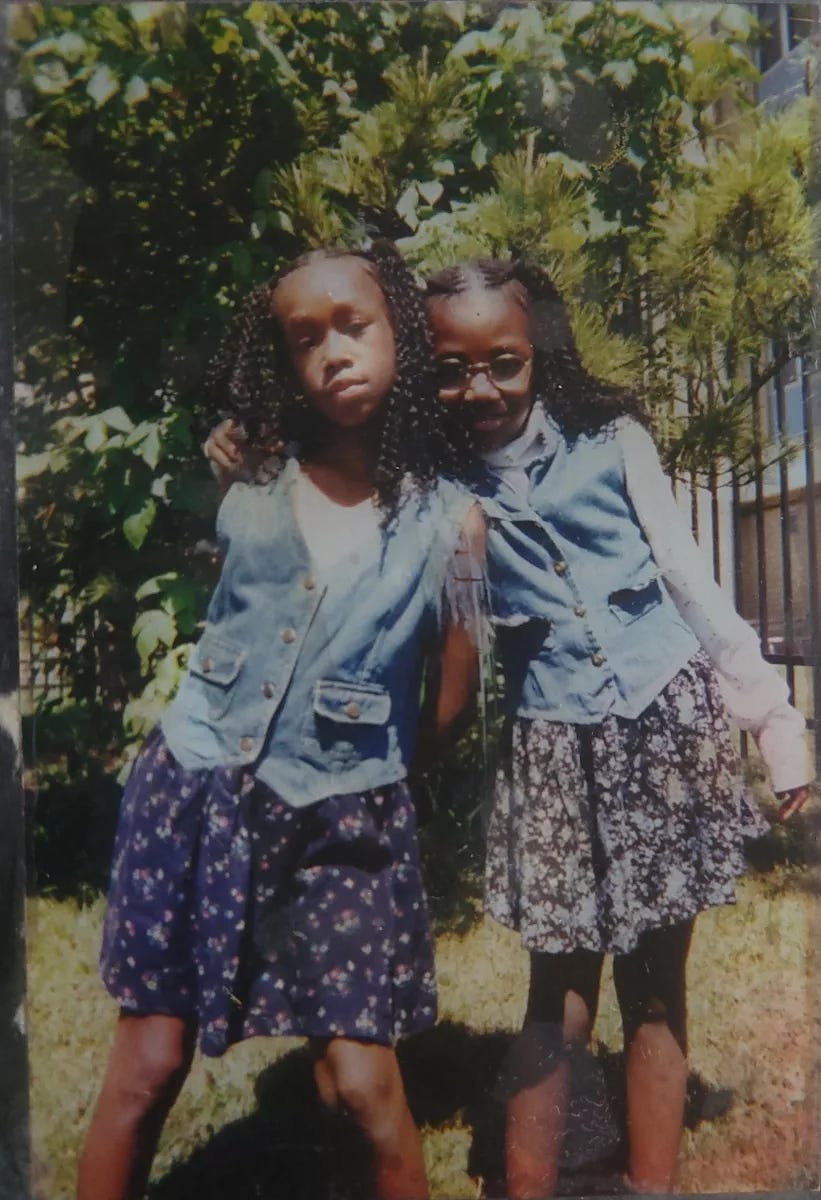
“When I hear people talk negatively about Bliss Towers or the Low Rise now,” she told me, “it honestly makes me sad. And sometimes it makes me angry. What I wish people who didn’t grow up there understood is that it was a community. It wasn’t just ‘the projects.’ It was families. It was working moms. It was grandparents. It was kids riding bikes and playing tag. It was people stretching what little they had and still sharing it.”
She remembers the labeling, the way an address could mark you. A principal once threatened to make an example of her brother as one of the “high-rise kids that were out of control.”
“That kind of labeling sticks with you,” she said. “Before people even know you, they’ve already decided who you are.”
And then: “It wasn’t a place of shame. It was a place of belonging.”
I also spoke with Sonya VanAlstyne, who lived in Bliss in the early 1980s. Sonya remembers it through what she calls “a child’s eyes.” “We had security all the time. It was much cleaner,” she told me. “All of us kids played in the hallways… we would use the stairs to go to different floors. We had the playground in the back by the Low Rise.”
Her family later moved to an apartment on Warren Street, a change she considered positive for her family. But her memories of Bliss remain tied to proximity, to the sense that life went on “exactly how it should be.”
Bliss Towers was not experienced by the people who moved into it as a mistake. It was housing. It was stability. It was a place where people felt safe.
Tyrone still talks about that first night as something expansive, even if he didn’t have the language for it at nine years old. A brand-new building. A key in his mother’s hand. A bedroom of his own. A future opening up floor by floor.
Everyone I talked to spoke fondly of community, of safety, and of fun. Those experiences, those memories matter. Because when buildings age, when concrete cracks and funding shifts and plans are drawn up in conference rooms, it can become easy to talk about structure without talking about people.
Linda put it plainly. “When people talk badly about Bliss or the Low Rise,” she told me, “I don’t hear criticism of buildings. I hear dismissal of families. I hear people overlooking humanity.”
Bliss was born out of upheaval. A city clearing land, redrawing maps, deciding what would stay and what would go. But inside its walls, something else happened too. Kids grew up. Families stabilized. Neighbors formed bonds that lasted decades.
The building has now aged. Its systems are old. Its future is uncertain. We are again at a crossroads, a moment where we will make decisions about what comes next. Conversations about demolition and redevelopment have been ongoing for years, and now there is a proposal before the Planning Board. These decisions will impact our small city for generations.
But before we rush toward what comes next, it is worth remembering what once felt possible inside those hallways. A child with his own room for the first time. Dance contests on the second floor. A grandmother in the low-rise next door. An address that, however it was viewed by people outside public housing, felt to many like belonging.
In Part Two, I’ll turn to the present — to the building as it stands today, the redevelopment proposal, and the questions facing the city about urgency, design, and responsibility.
For now, it feels important to pause here. Bliss Towers holds decades of memories. And whatever happens next, the way we carry these stories forward will matter.
This is beautifully written. As a lifelong resident of Hudson and Bliss (lived n former employee) this is wonderful synopsis. Excited for part 2. Job well done!
thank you Caitie, so much beauty in Bliss, I never knew